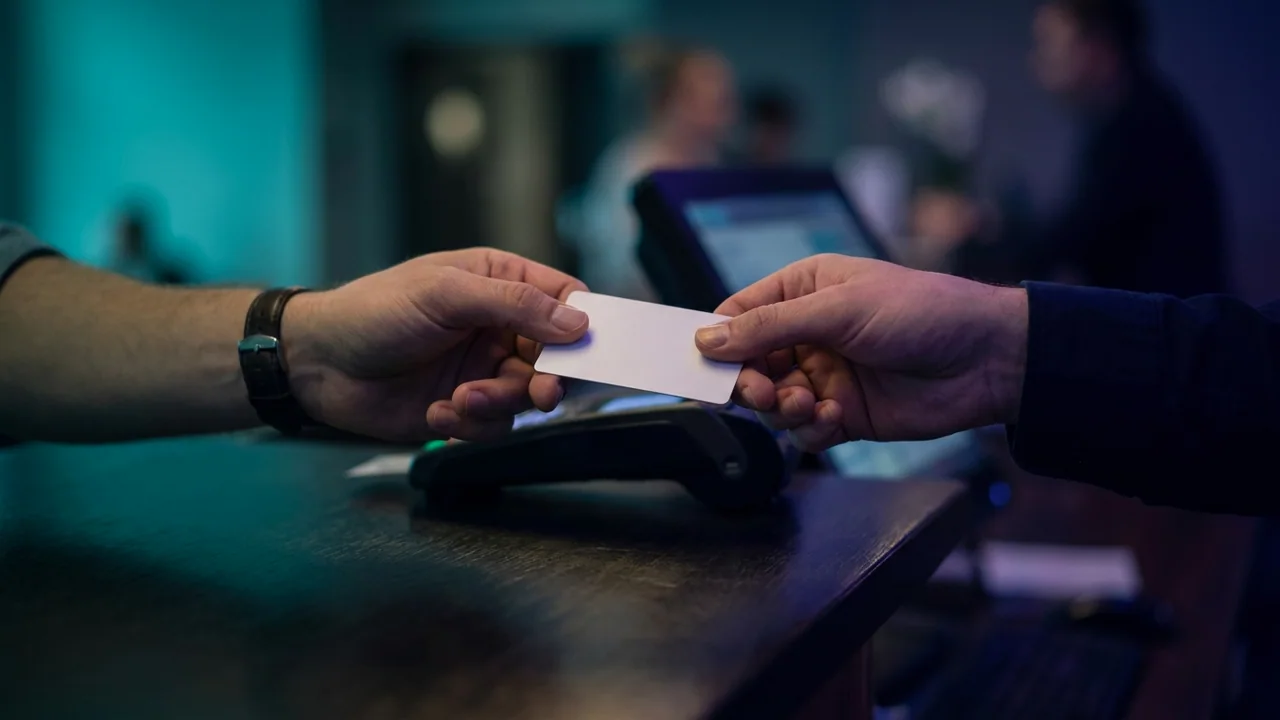
Both are the same card, on the same rail
Start with the thing that gets lost. Apple Pay and Google Pay are not payment methods in the way that cash and cheques were different payment methods. They are wrappers. Inside each one sits a card that you already own, issued by a bank you already bank with, running over the same network it was running over before you added it to a phone.
That means the parts people care about are not up for discussion. The money leaves the same account. The charge appears on the same statement. The dispute route is the same dispute route, decided by the same issuer, under the same scheme rules and the same time limits. If you have read about what a card network will and will not reverse, every word of it applies unchanged to a payment made through a wallet.
So the honest headline is that this choice is smaller than the internet implies. Neither option is a mistake. But there are five real differences, and on a cross-border annual charge to a small merchant, one of them decides whether the payment goes through on the first attempt or on the fourth.
What the merchant sees, and why it differs
Type a card into a payment form and the sixteen digits, the expiry and the security code travel to a payment processor. Pay with a wallet and something else travels instead: a device-specific token standing in for the card, plus a cryptogram valid for that single transaction and useless afterwards.
The practical consequence is about the future rather than the present. If the processor holding your typed card details is compromised in eighteen months, the details are card details. If it is holding a device token, the token is bound to your phone and to one merchant, and it is worth nothing to anybody who takes it.
A wallet does not protect the payment you are making. It protects you from the copy of it that somebody keeps.
Worth adding that on this site nothing sensitive reaches the seller in either case. The payment page belongs to a payment company, and what comes back to us is confirmation that an amount cleared. There is no card kept on file because there is no card to keep, which is the same reason no renewal can be taken later without you doing it deliberately.
Declines: where a wallet genuinely helps
This is the difference that actually shows up in a normal week, and it is the one almost nobody writes about.
A fraud system does not evaluate a payment on whether it is fraudulent. It evaluates it on how closely it resembles the transactions that historically were. An annual charge, in a currency that is not local to the card, to a merchant the cardholder has never paid before, entered by hand at ten in the evening, matches that pattern almost exactly. Nothing about it is wrong, and it still gets stopped.
A wallet payment changes the shape of that request. It arrives with evidence attached that the cardholder authenticated on their own device, with their face or their fingerprint, seconds ago. That is precisely the reassurance the fraud model was missing, and it is why the same card, for the same amount, to the same merchant, frequently clears through a wallet after having been refused as a manual entry.
There is a corollary worth acting on. If you have had cards stopped on foreign purchases before, either flag the charge in the banking app beforehand or simply have that app open when you pay, so an approval prompt can be answered in seconds rather than minutes. A prompt left sitting for two minutes is often treated as a refusal, and the retry that follows arrives at the issuer looking worse than the first attempt did.
| Dimension | Typed card | Apple Pay or Google Pay |
|---|---|---|
| Dispute rights | Full card rights | Identical. Same issuer, same rules |
| What the merchant chain holds | Your card number, at the processor | A device token, useless elsewhere |
| First-attempt success on a foreign charge | Lower. The classic profile for a hold | Higher. Arrives already authenticated |
| Time to complete the payment | A minute of typing, plus a bank prompt | A few seconds on the device |
| Risk of a mistyped digit | Real, and the commonest cause of a false decline | None. Nothing is typed |
| Matching the charge to an order later | Straightforward | Occasionally awkward. Keep the confirmation |
| Availability | Everywhere | Only where the page offers it, on supported hardware |
Protection: identical, and worth saying so
There is a persistent idea that a wallet payment is somehow harder to dispute, presumably by analogy with methods that genuinely are final. It is not true and it is worth being flat about, because the belief causes people to type a card manually in the name of safety and end up with a payment that is both more exposed and more likely to be declined.
When you dispute a wallet payment you contact the same issuer, quote the same statement line, and rely on the same grounds. The token is invisible to that process. It exists between the merchant and the network, not between you and the bank.
It helps to separate two ideas that routinely get muddled. Authentication is about proving the payment is yours at the moment it happens, and a wallet improves it considerably. Protection is about what can be undone afterwards, and it is a property of the card rather than of the way the card was presented. The only place the two touch is a narrow one: unusually strong evidence that you approved a charge can make an unauthorised-use claim harder to argue later. For every other kind of dispute, and for all of the situations that actually arise on a subscription, it changes nothing.
Where the methods genuinely diverge is further out, at the edge of the list. PayPal adds a second claims process on a different rail. Cryptocurrency removes the concept entirely, which is a legitimate choice made knowingly and a bad one made by accident. The full comparison of all five routes, scored on what each leaves you afterwards, is on IPTV payment methods.
The one case where a wallet is worse
Reconciliation. It is unglamorous and it is the only genuine mark against wallets on a purchase like this one.
A tokenised charge can land on a statement with a descriptor that reads less obviously than a manually entered one, and the card number shown against it is often the device account number rather than the last four digits you recognise. Eleven months later, when you are checking what an annual charge was for, that gap between what you remember and what the statement says is exactly the kind of small friction that turns into a confused call with the bank.
The fix takes ten seconds and it is the same fix for every payment method: keep the confirmation you were sent. Amount, date, method, and the expiry date of the subscription itself as a full calendar date. That single message resolves the question instantly and is also the first document any dispute would rest on. The habit is described in more detail in the ten minutes after you pay.
The second, smaller case is availability. A wallet only helps where the page offers it and where you are holding the right hardware. If you are paying from a desktop with no wallet configured, typing the card is not a compromise worth agonising over. It is the ordinary way to pay, and it has been for thirty years.
Statements and matching a payment later
A related point that applies to both methods equally, and catches people out on any annual purchase.
The amount on your statement may not be the amount on the page, and the reason is usually a foreign transaction fee rather than anything the seller did. Some issuers add a percentage when the currency differs from the one the card was issued in. It is their charge, it is disclosed in their terms, and it lands as part of the same line rather than as a separate one, which is why it looks like a discrepancy.
Paying in the currency you actually hold is what avoids it, which is why the amount collected in each market is a set local figure rather than a conversion performed at the till. The six market figures are on the pay for IPTV by country hub. The base numbers are $69 for one screen, $97 for two and $137 for three, paid once, with nothing scheduled afterwards and no card retained to schedule it with. At the entry level that is roughly $5.75 a month, and the full breakdown sits on the pricing page.
Which to use, in one paragraph
If the card is already in your phone and the payment page offers the wallet, use the wallet. It is faster, nothing gets mistyped, the merchant chain ends up holding a token instead of a number, and it clears on the first attempt more often on exactly the kind of charge this is. If the wallet is not available, type the card without a second thought, because your position afterwards is identical either way. If a card has already been refused once, stop and clear the block before trying anything else, since a wallet cannot argue with a decision the issuer has already taken.
And whichever you choose, do the part that matters more than the method: agree the total in writing before you pay, get the expiry date as a calendar date, and keep what you are sent. That sequence is set out step by step on how to pay for IPTV, and if anything on the payment page does not match what was agreed, the contact page is the right place to stop and ask rather than pressing on.