














Nobody sells the sport back to you afterwards
Top-flight football, motorsport, tennis, boxing, mixed martial arts, rugby and everything alongside them — live, in HD, up to 4K where the source allows. No sport tier waits behind a second payment, and no title fight quietly appears on a bill once the year is already settled.
Watching on demand costs precisely nothing extra
Fresh releases and complete series turn up week after week. Not one of them puts a second line against what you handed over in the first place.
Settle the transaction before you settle the bill
Plain answers about the payment itself — how paying actually works, which methods leave you a way back, what a bad payment request looks like, and what to do with the login when it lands.
What the single charge covers
28,000 live channels, with 300,000 films & box sets alongside them, running as far as 4K — bought once and never invoiced again, in homes across the US and Canada, the UK and Ireland, Australia and New Zealand.
Everything unlocks at once
Films, box sets, live sport, rolling news, kids TV — and an on-demand shelf that gets topped up every week. Nothing is fenced off for a sport tier or a second invoice three months in.
One charge, then silence
No card number is stored and no standing authority is created, so nothing can rebill you. Twelve months later the subscription lapses on its own unless you ask for another year.
Someone answers either side of it
Ask the awkward questions before you send anything, and reach the same thread if it misbehaves after. Fire TV Stick, Apple TV, Android and iOS, smart TVs, PC & Mac — nothing to rent.
One charge. You pick the size of it.
Simultaneous screens are the only variable — identical channels, identical on-demand library and the same sport on every tier. Payment is a single annual amount by card, Apple Pay, Google Pay, PayPal or cryptocurrency. Nothing is stored, nothing renews by itself, and the whole order takes about a minute on WhatsApp or Telegram.





 + more
 Spending more buys screens. It does not buy content.
Whichever figure you settle on, the library behind the login is the same library. There is no sport bolt-on waiting behind a second payment, no channel pack to bolt on later, no nudge to upgrade in month six — and no stored card sitting somewhere with a date pencilled against it.
- 28,000+ live channels spanning the US, UK, Ireland, Australia and beyond
- 300,000+ films and full box sets, with new material weekly
- Live sport and the pay-per-view nights, without a further charge
- Genuine 4K alongside Full HD and HD — no SD dressed up as more
- A working guide, plus catch-up across the bigger channels
- Servers tuned against buffering, measured at 99.9% uptime
- Fire TV Stick, Apple TV, Smart TVs, Android, iPhone, Mac, PC
- Your login arrives minutes behind the cleared payment
- A single annual charge — nothing is ever pulled automatically
- Refund terms written down and readable before you commit
Set our payment terms beside the two obvious alternatives
Line-ups look much the same everywhere you shop. The real difference sits in how the charge is taken, and in what leverage you keep once it has gone through.
| ★ Plainest terms PayIPTV | Anonymous IPTV sellers | Cable and satellite | |
|---|---|---|---|
| Monthly equivalent | $5.75 | $5–15 | $30–70 |
| How often it is taken | Once, then never | Usually every month | Every month, fees on top |
| Your card left on file | Not at all | Frequently | By default |
| Rails that allow a dispute | Cards, PayPal, wallets | Whatever they insist on | Stored card |
| Figure published up front | Quote on request | Teaser rate only | |
| Live sport and fight nights | Carried | Priced separately | Bolt-on bundles |
| Genuine 4K, not stretched SD | Uncommon | Reserved for top tier | |
| Behaviour under evening load | Falls over | Throttled | |
| Works on hardware you own | Partly | Their rented box | |
| Wait between paying and watching | Roughly 5 minutes | Until somebody replies | An engineer slot |
| Locked in | Never | Never | 12–24 months |
| Somebody to hold to account | A named human, fast | Frequently nobody | Hold music |
One figure, and it carries the whole channel list, the live sport, the pay-per-view nights and the on-demand shelf. Nothing is rented to you, nothing sits behind a second tier, and no forgotten date comes back to bite in eleven months.
One charge.
Then it just runs.
What lands after the money does is small and specific: a username, a password, a server address and a guide written for the device you named. Usually inside five minutes, in the conversation you ordered in. From there it is films, box sets and live sport, as far as 4K, on screens already in the house, with a person reachable at any hour when something needs sorting.
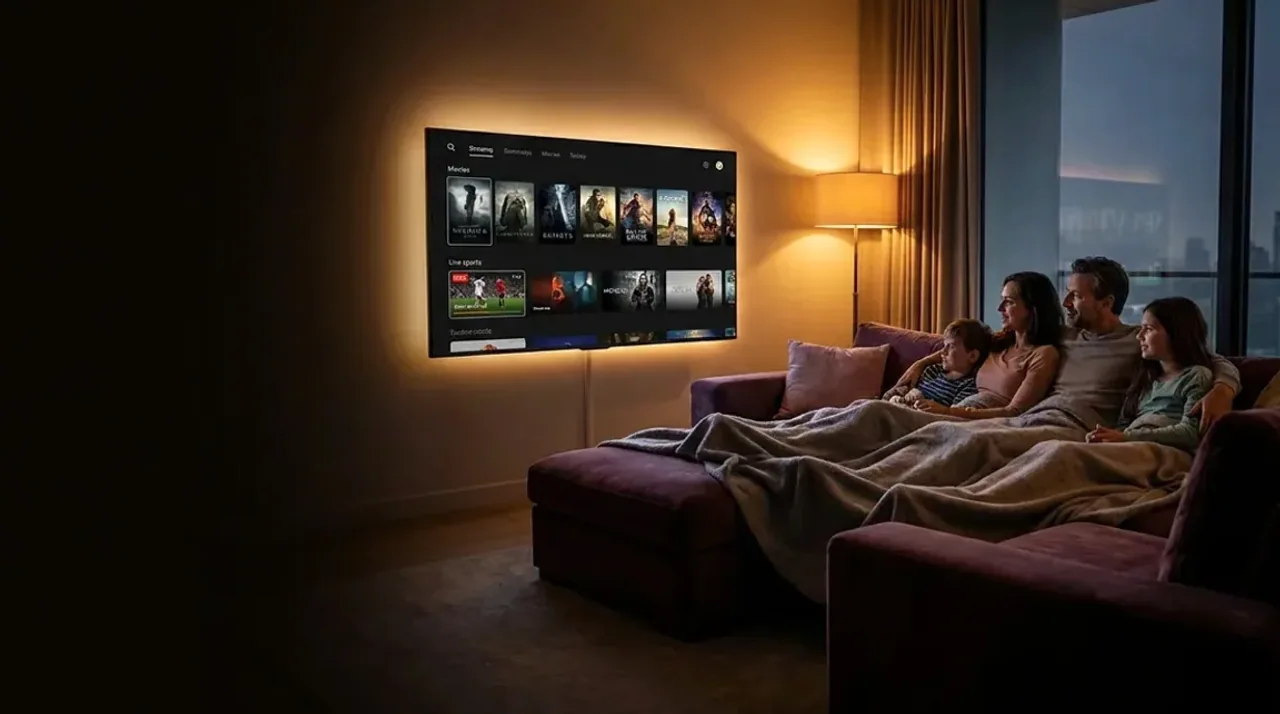
Everything below is live from the first sign-in
Sport as it happens, films while they are still new, complete box sets, something for the children, rolling news, documentaries and music. All of it sits behind the one annual figure, and all of it is filed so you land on something in a couple of taps instead of scrolling until you give up.
 LIVE Sport Matches as they happen, plus title fights
  Movies Fresh releases with no rental fee attached
  Series Full runs, opening episode to finale
  Kids Cartoons and things the family can share
  LIVE News Rolling headlines from around the world
  Documentaries Nature, science and true crime
  Music Live sets and music channels
  4K Ultra HD Actual 4K, never stretched SD Plenty more Open the whole 28,000-channel list
 The payment is the last thing you buy
Whatever screens are already in the house will do — the Smart TV, the Firestick behind it, an Apple TV, a phone, a tablet, the laptop on the kitchen table. Sign in on every one of them if you want; the tier limits simultaneous playback, never the number of installs. Nothing is rented to you, no hardware appears on the bill, and no deposit is taken.

Whatever player you already trust will take these credentials
4,500+ households have paid for a year here, the bulk of them spread over our six English-speaking markets — and what they mention most is how little happened next: no second charge, nothing to cancel.
Written up by the people who already paid
Accounts from buyers across the US, UK, Ireland, Australia and Canada, focused on the bit that worries everyone: which rail they used, how long the gap was, and who picked up when they needed something sorting.
An ordinary card, not a wire
The deciding factor was being handed a normal card checkout rather than pointed at some app that moves money one way only. One charge of sixty-nine dollars, and roughly four minutes later the credentials were sitting in WhatsApp.
They kept nothing of mine
Twice before I have been stung by a service that quietly helps itself again a year on. Here there is no card on file to help itself with. The year runs out, the login stops, and that is the end of it unless I say otherwise.
Went through PayPal deliberately
Any other way and I would have walked. Routing it through PayPal meant a route back existed if the whole thing evaporated. It did not, but I slept better for having the option.
Still choosing an app when it arrived
I was halfway through reading about which player to install when the message landed. Every single thing they had promised would be in it was in it, spelled out, nothing missing.
I led with the difficult questions
Refunds, what happens the night a channel disappears, who exactly I chase. All three came back plainly inside a few minutes with no attempt to sell at me. That conversation is why I ordered.
One line on a whole year of statements
A hundred and thirty-seven dollars did the entire household for twelve months. Tablet upstairs, television downstairs, my phone out in the garden — and exactly one entry to reconcile at the end of it.
A number, printed, before I asked
Everyone else wanted me in a chat begging for a quote before they would commit to a figure. This one was on the page before anybody knew my name, and it matched what I eventually handed over.
Crypto, and a receipt in writing
Moved USDT across and had written confirmation plus my login inside ten minutes. The following day somebody messaged unprompted to check the setup was still holding up.
Something broke; somebody fixed it
A stream fell over on a Saturday evening. One message, and it was working again before the restart. Having an actual person at the far end is most of what the money buys.
The second year was my call
Twelve months on I sent a single message and handed over the same figure again. Nothing had been taken in the meantime, and every favourite and setting was exactly where I had left it.
The messages those quotes came out of
Quotations on a website are worth roughly what it costs to type them, so here are the conversations they were lifted from. Twelve of them, which is a thin slice of an inbox that fills up again every day — real orders, real questions, real complaints, in more than one language and across a dozen different phones. The blurred blocks cover numbers, logins and card digits; nothing else has been touched.
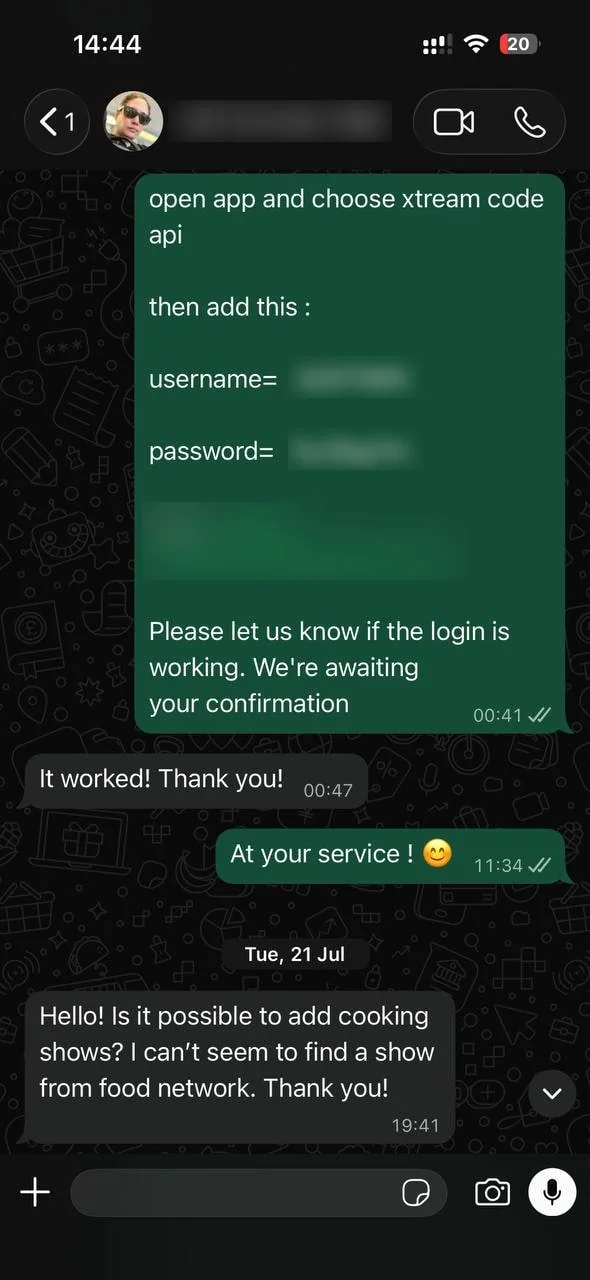
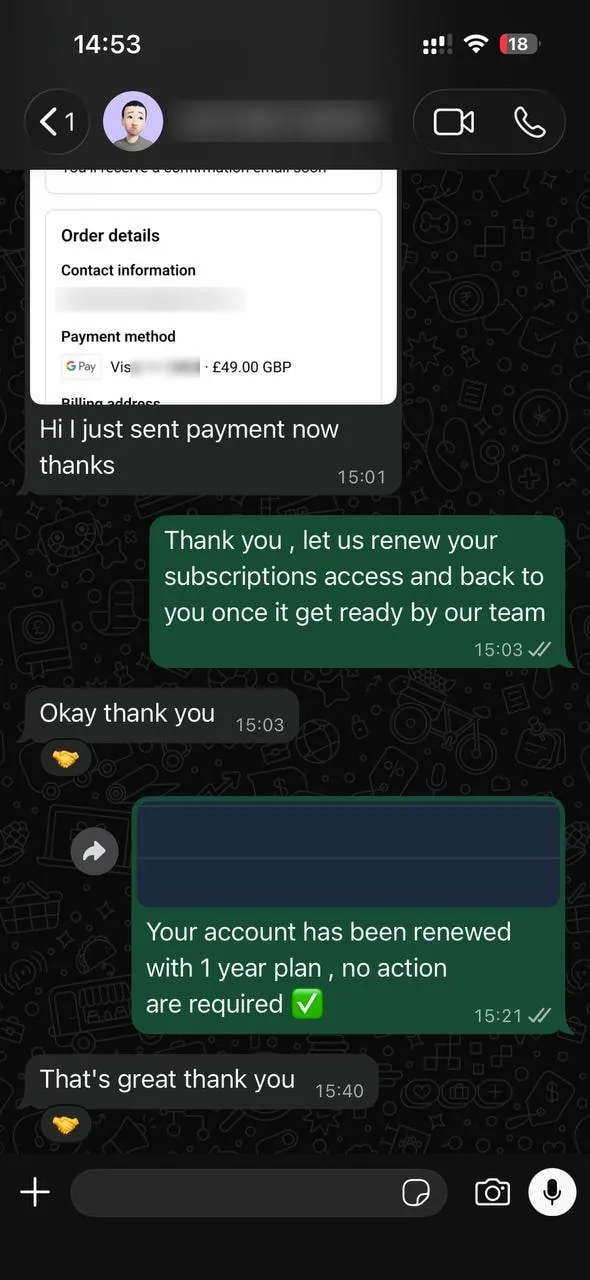
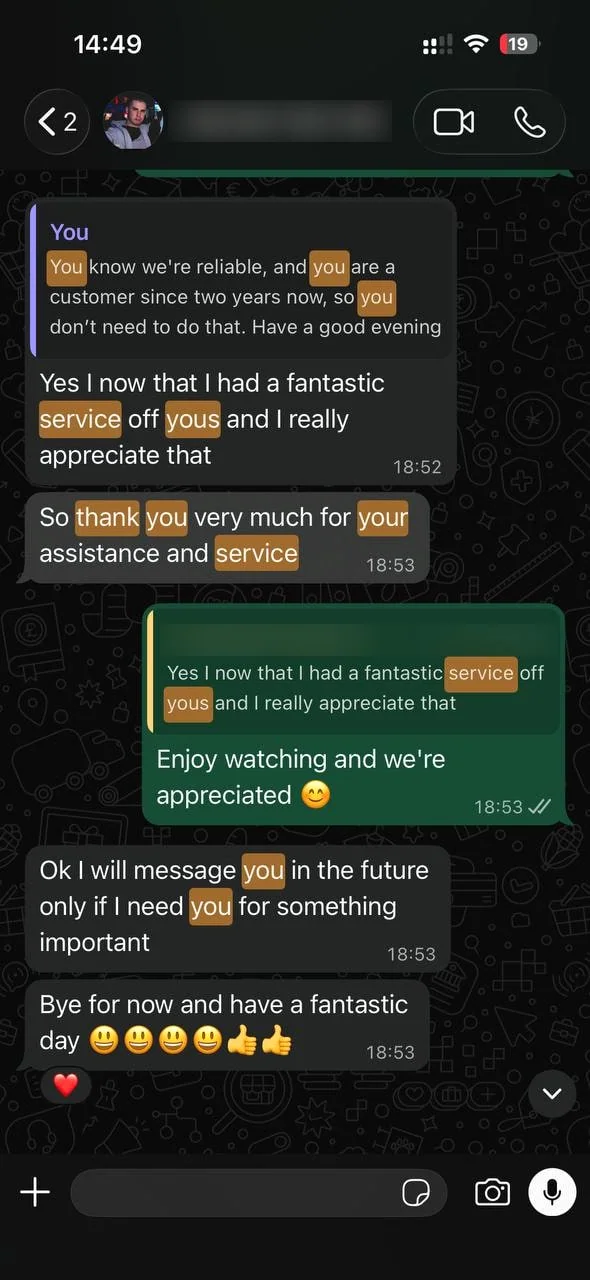
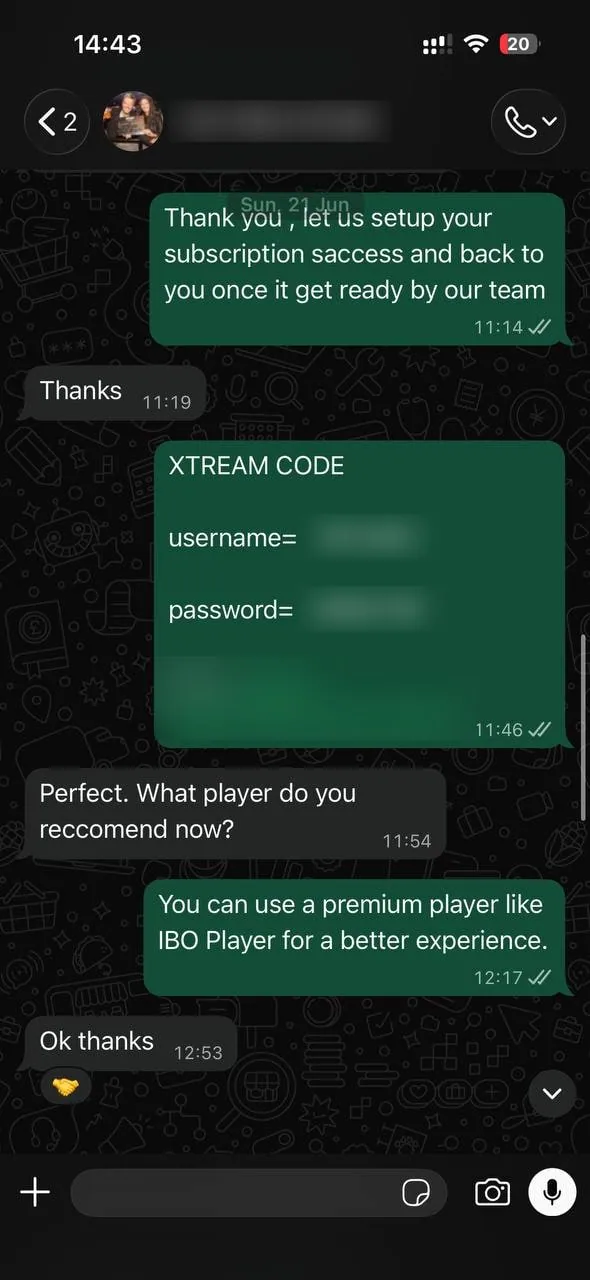
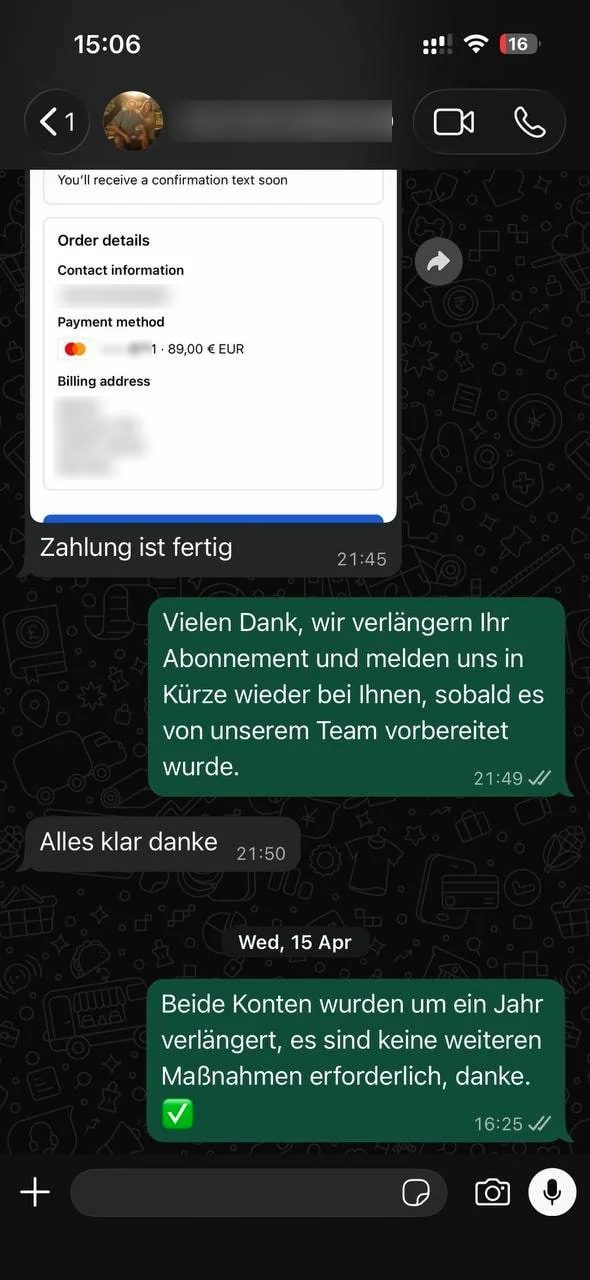
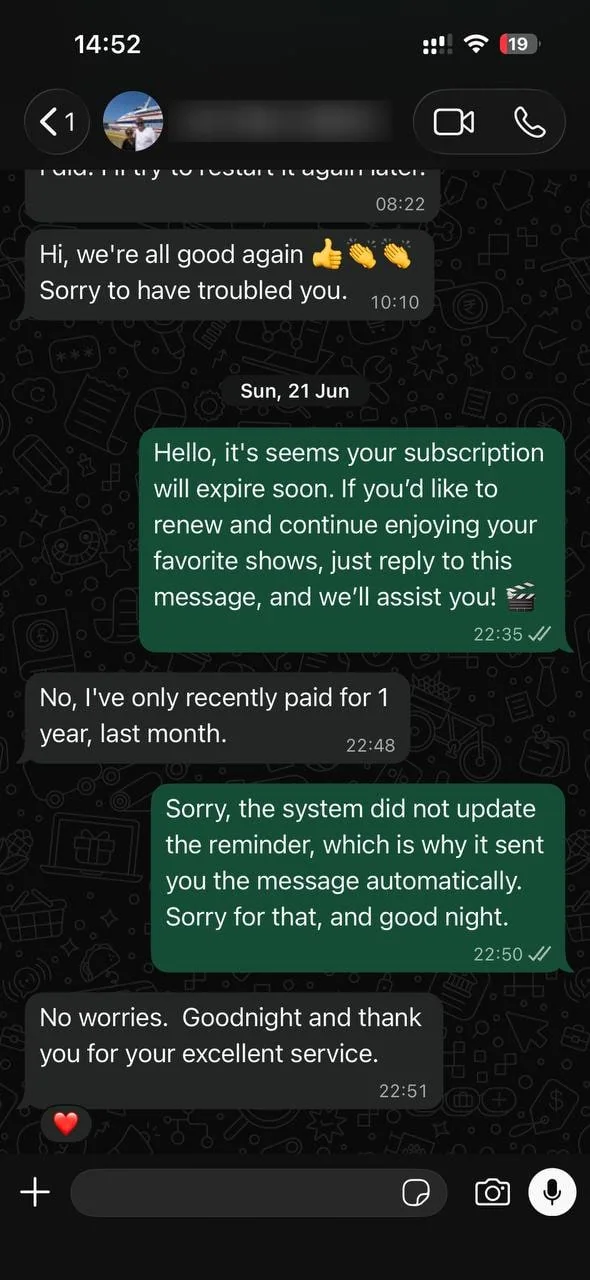
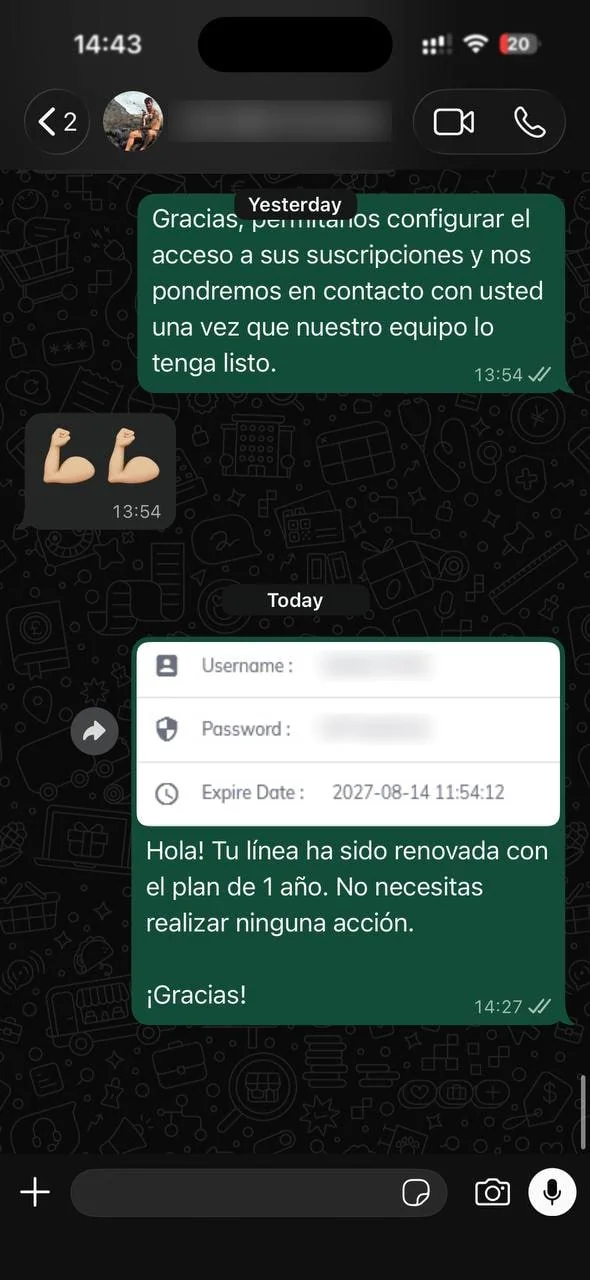
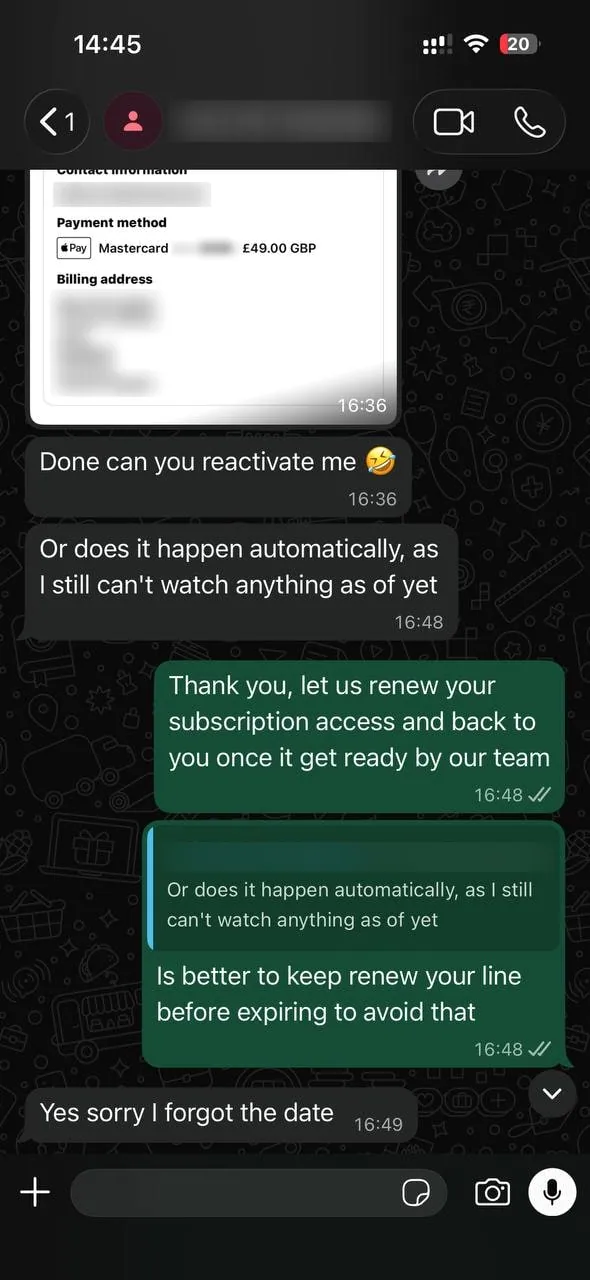
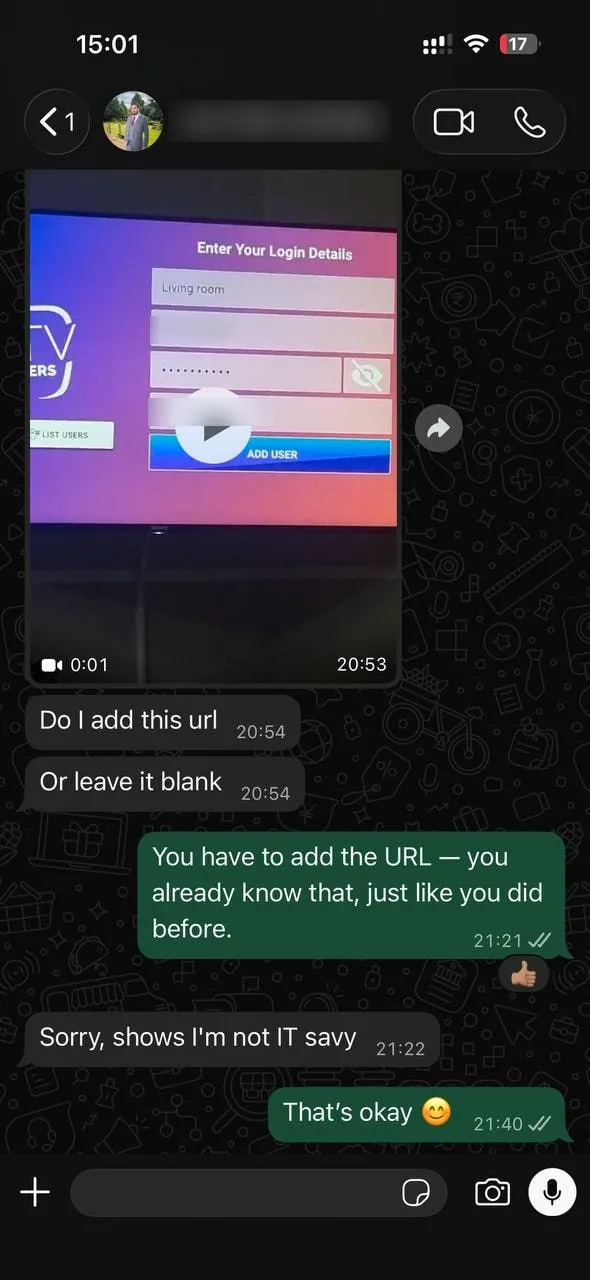
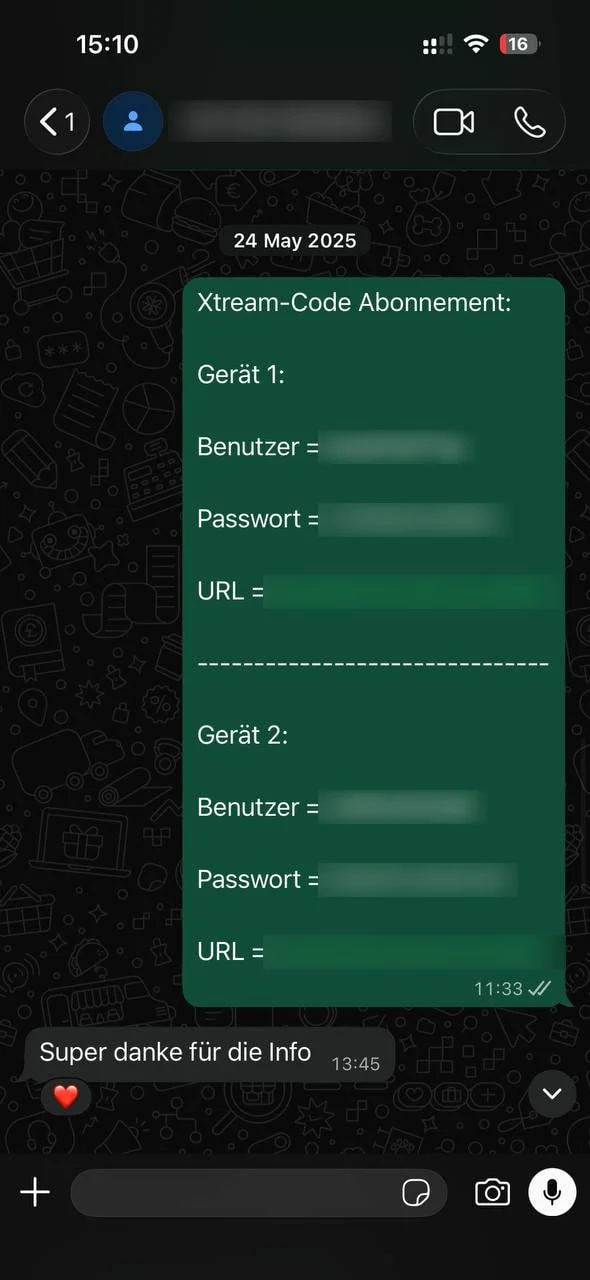
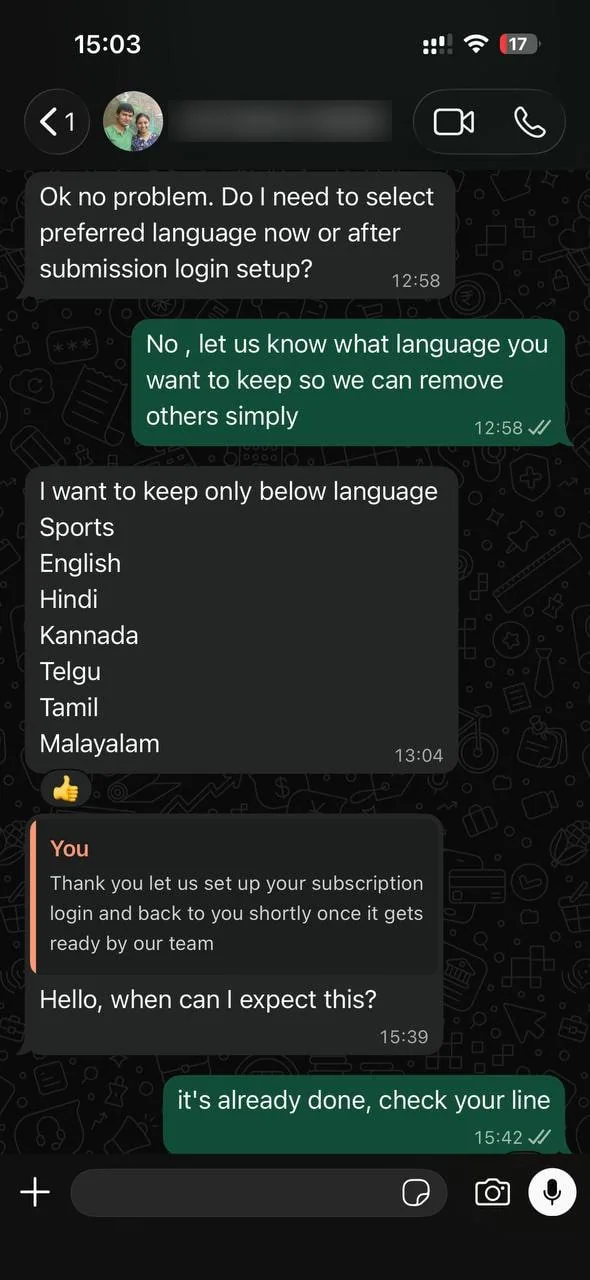
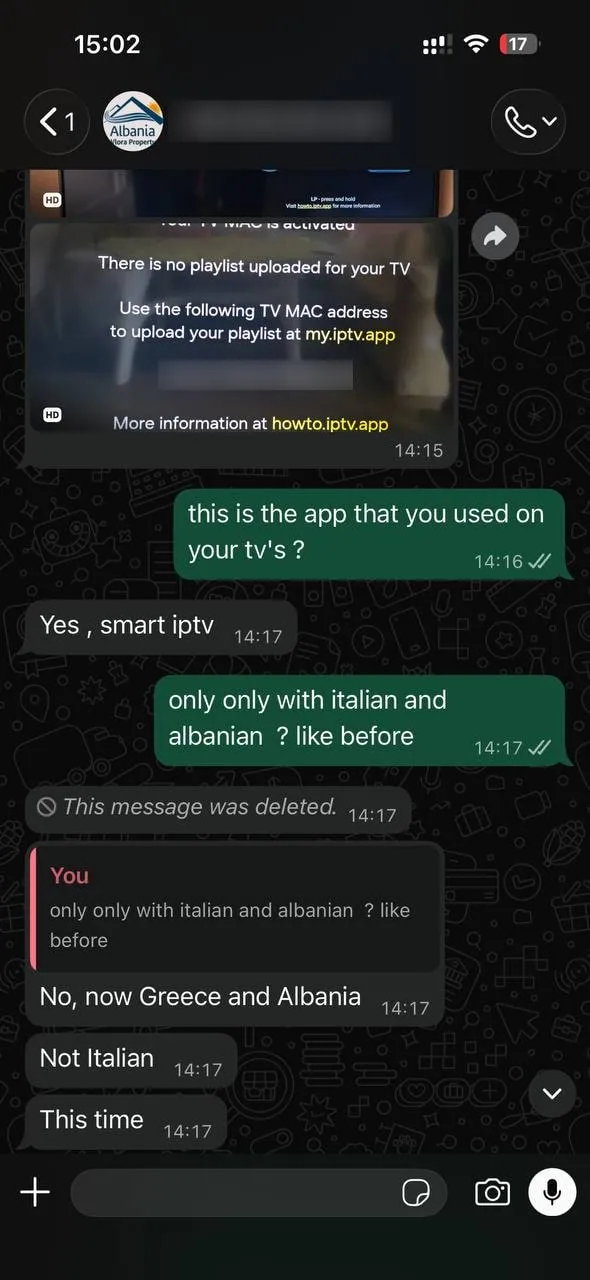
Tap any thread to read it without leaving this page.
Settle it once, carry it anywhere
What you need is a broadband line. There is no dish to fix to a wall, no cable to route through the house, no regional receiver whose coverage map you have to sit inside. Our channel list and our desk are built for the English-speaking side of the world, which is why the United States, United Kingdom, Ireland, Australia, Canada and New Zealand account for most of the money that reaches us — and why the figure on the plan card is quoted in the currency you actually earn in, before you agree to anything. Relocate, take a holiday or sign in from a different continent and nothing has to be bought a second time. The credentials travel with you, and the channels from back home sit alongside the ones from wherever you have landed.
Read who takes your money →Paying for IPTV, from first message to twelfth month
The whole transaction, taken apart — tap a topic to read it.
A subscription here buys twelve months of access to a channel list and an on-demand library, delivered down the broadband line you already pay for. There is no box in the post, no engineer appointment and no agreement that outlives the year. Behind the figure sits server capacity, bandwidth, content ingest and a support desk staffed at three in the morning — which is precisely why a number that looks impossibly low usually is. Because nothing physical runs into your street, the annual amount sits well under a comparable quote from a cable or satellite provider for a similar line-up. What you are not buying is ownership. This is access for a defined period; when the period ends, the access ends, unless you decide to buy another one.
Most sites want a card number by page two. This one has no checkout, no account and no payment form anywhere on the domain. You press an order button, a short form takes the plan and a phone number, and everything after that happens as a conversation. The reason is not technical. A checkout is engineered to move you through before you think; a conversation lets you ask the questions that decide whether this was a good idea — what renewal costs, what the refund terms really say, whether your television is supported. It also means no card details are ever typed into this site, so there is nothing stored here to leak. The honest trade-off is that it is slower than one-click. Open a conversation whenever you want to test that.
Ways of sending money are not interchangeable, and the difference only becomes visible on the day something goes wrong. Card payments, Apple Pay and Google Pay all settle across the card networks, which means a chargeback route exists where a service is paid for and never delivered. PayPal runs a separate claims process of its own. Cryptocurrency has neither: once a transfer confirms, no bank, exchange or seller can pull it back. That is not an argument against crypto — it is quick and private — but it should be a decision you make, not one you are nudged into. Any seller who accepts only irreversible rails has told you how confident they are in their own service. The side-by-side comparison lives on the payment methods page.
A payment request worth trusting is boring to read. It quotes one figure, and that figure matches the published price rather than a private one. It names the period being bought. It comes from the same account you have been talking to, not a second handle that appears at the last moment. It offers a choice of methods instead of insisting on one. It carries no countdown, no discount evaporating in ten minutes and no suggestion of moving the conversation somewhere less traceable. And it survives being checked: ask for the renewal figure and the refund window in writing before you send anything, and a straight seller simply types them out. Ours are already on the pricing page and the refund page, and they read the same in private.
Some patterns repeat often enough to be treated as rules. A seller who refuses card and PayPal and will only take something irreversible has stripped out your recourse deliberately. Anyone asking you to read card numbers into a chat window is not collecting money the way legitimate businesses collect money. A lifetime plan cannot survive its own arithmetic — servers cost money every month forever, so one payment for permanent access is a wager on the operator vanishing first. A price that is a fraction of everybody else has usually bought a resold feed that nobody involved can repair. And urgency is the oldest tell of all: a real annual subscription will still be there, at the same figure, tomorrow morning. The longer list sits on the safety page.
Three things come back in the same conversation, normally inside five minutes: a username and password, the server address the app needs, and a setup guide written for the exact device you said you owned. Nothing is posted, nothing needs confirming by email and there is no queue to join. Order at four in the morning and it still arrives, because the desk is staffed around the clock — that is simply what selling into six countries requires. Enter the details into the player and the channel list and programme guide populate within a minute or two. If something looks missing, reply in that same thread instead of starting again; whoever took the order can see it in front of them. Device-by-device instructions are on the setup guide.
Send them in one message, and send them before any money moves. First: what will I pay to renew in twelve months? The answer you want is a figure, and the same figure. Second: will you store my card? The answer you want is no. Third: if I simply do nothing when the year runs out, what then? The answer you want is that it lapses. A seller who replies plainly to all three has described the shape of the deal; a seller who dodges has described something too, just less flatteringly. Ours are the same figure, no, and it lapses — printed here rather than quoted privately, so there is nothing to renegotiate in month eleven. Anything left over is settled in the FAQ.
It means the transaction finishes when it completes. No card number is retained, no continuous payment authority is created, and nothing wakes up on an anniversary you have long forgotten. Twelve months on, the subscription stops unless you send a message asking for another year at the published figure. That is the reverse of how most subscriptions are built, and the reversal is the point: the standing authority is where this industry earns its quietest money, so removing it removes the argument entirely. The practical consequence is that cancelling is not a process. No retention call, no cancellation page buried three clicks deep, no form. You do nothing, and it ends. The entry plan works out at roughly $5.75 a month, though you never actually pay by the month.
The most common route, and the one with the most protection stacked behind it. You start the payment yourself from a link or a wallet prompt — nobody asks you to dictate card numbers — and it clears through the card networks in seconds. The two wallets add something worth having: the merchant receives a token rather than your real card number, so there is nothing durable to keep even if anyone wanted to. Because it settles instantly, the login normally follows a few minutes later. One caveat that catches people out: some banks flag a first payment to an unfamiliar merchant and decline it automatically. If that happens, approve it in your banking app and the second attempt goes through. That is your bank being cautious, not the payment failing.
PayPal suits anyone who would rather not expose a card at all, and it brings a dispute process that runs independently of your bank. Transfers settle instantly, so activation is no slower than card. Two things are worth understanding before you choose it. Buyer protection is a claim you open, not a switch that flips — it has conditions and a time limit, and it rewards people who raise problems early. And a currency conversion may apply where your account is held in something other than the currency quoted; that is a visible cost rather than a hidden one, but it is worth knowing about. If you want both routes open at once, funding the PayPal payment with a card rather than a stored balance keeps the card network in reserve behind it.
Crypto is accepted here, and it deserves a warning rather than a sales pitch. Once a transfer confirms on-chain, nobody can reverse it — not us, not an exchange, not a bank. There is no dispute button to press afterwards. That makes it excellent for privacy and useless as a safety net, so the sensible use is where you already trust the other side or the amount is one you could absorb losing. Two practical notes: send the exact figure quoted, because network fees taken out of the total can leave a payment technically short and stuck in review, and check the network as carefully as the address, since the right amount on the wrong chain is gone. On a first order with any provider, card or PayPal is the more defensible choice.
The uncomfortable question, so here is the unvarnished answer. Short interruptions happen to every provider that exists on the internet; the thing that separates them is what the seller does during one. Here: report it in the thread you ordered in and you get a status answer rather than silence, plus time added to the subscription where the outage is genuinely at our end. Where a fault cannot be repaired, the written refund terms apply rather than an improvised offer. And if a provider ever stops replying altogether, your position depends entirely on how you paid — which is the whole reason this site keeps returning to the payment method. Card and PayPal leave you a route. Something irreversible leaves you an expensive lesson.
Be wary of anyone advertising a no-questions refund on a year of access; it is a line, not a policy, and it tends to evaporate at the moment of asking. What is realistic is a defined window at the beginning during which a genuine fault we cannot resolve gets your money returned. Outside that window, honesty says a partial remedy is likelier than a full one — time added, a change of plan, or troubleshooting continued until the problem is genuinely gone. What is never a refund case is a broadband line that cannot carry the stream: no provider can repair your wireless from a distance, and a seller who implies otherwise is arranging a fight for later. The actual terms, in plain language, are on the refund policy page.
Screens are the only thing that moves the number, which makes it the one decision worth a moment. One screen at $69 fits a single viewer, or a household that genuinely never has two televisions running together. Two at $97 covers most couples and the everyday case of a set in the living room plus a tablet in bed. Three at $137 covers a full house without anybody bargaining over the remote. Installs are unlimited on every plan — what the number caps is simultaneous streams, not copies of the app, so a one-screen plan spread across a phone, a laptop and two televisions is fine provided only one of them is playing. Move up mid-term and you pay the difference, prorated, on the same login. See the two-screen plan.
Two things, both checkable in a minute. First, the device you intend to watch on: recent smart TVs, Fire TV Sticks, Apple TV and Android boxes, phones, tablets, laptops, desktops — the players this needs run on all of them, so the answer is usually whatever is already sitting under the television. Second, your broadband — about 15 Mbps for a steady Full HD picture, 25 Mbps and upwards for 4K, plus roughly 10 Mbps for each additional screen. Most lines across these six markets clear that without noticing. Where households do run into trouble, the culprit is almost always the wireless between router and TV rather than the line itself, and an ethernet run or a powerline adapter resolves the majority of it. Full checklist on the setup page.
All three are deliberately dull. Renewal is a single message at the figure published today, and your channel order, favourites and settings survive it — nothing is wiped and no new login is issued, so the television carries on as though nothing happened. Upgrading part-way through costs the difference between the two plans, prorated for the months remaining, and takes effect on the same account within minutes. Walking away needs no action whatsoever: with no card held and no authority in existence, doing nothing is the cancellation and access simply stops at the twelve-month mark. There is no retention offer, because there is no rolling subscription to retain. Subscribers say this is the part that surprises them, which says more about the rest of the market than about us.
The technology raises no question at all — pushing video down a broadband line is exactly what the main national broadcasters do in their own apps. Sellers are where the variation lives. So the question worth asking is not whether IPTV is legal, but whether the outfit about to take your money is running a legitimate business. Every signal you can genuinely check is one this site already turns on: a price in public, a renewal figure stated in advance, refund terms in writing, named people behind the writing, more than one way to pay, and a desk that answers questions before a penny has moved. Paying by card or PayPal also leaves a record and a dispute route, which is protection rather than exposure. None of this is legal advice, and responsibility for what you watch stays with you. More on the legal page.
Reviews describe somebody else, and then somebody else again, which leaves your own testing as the only kind that counts — and the first two days are when every option is still open to you. Check the dozen channels you actually watch instead of admiring the total. Watch something live during the evening rush rather than at eleven in the morning, when every service on earth looks flawless. Use the television you will really use, not just the phone in your hand. Send support a deliberately awkward question and time the reply. If any of it goes badly, raise it that week rather than that quarter: recourse is at its strongest in the first days and its weakest in month eleven, and that holds for every provider including this one. What people reported afterwards is on the reviews page.
Interrogate us before you spend a penny
Nothing about this is meant to be a leap of faith. Open a chat and put the awkward questions first: what exactly the plan carries, which rails we settle on, how long the wait is once the money clears, and what recourse you have on the day something breaks. Whichever of these two apps is already installed will do.
WhatsApp +1 (501) 701-2848
Straight through to somebody who can answer. Nothing to sign up for, no reference number, no queue.
Desk is open · typical reply under five minutes Open a WhatsApp chat →Telegram @tvelitesupport
Identical desk, identical answers, for anyone who lives in Telegram rather than WhatsApp.
Open a Telegram chat →The questions people ask before they hand over money
Three exchanges in a chat window. That is the whole process.
Nobody visits, nothing is signed, and no long number of yours gets typed into a form on this website. You tell the desk what you need, settle it on a rail of your choosing, and the credentials come back down the same thread you started in.